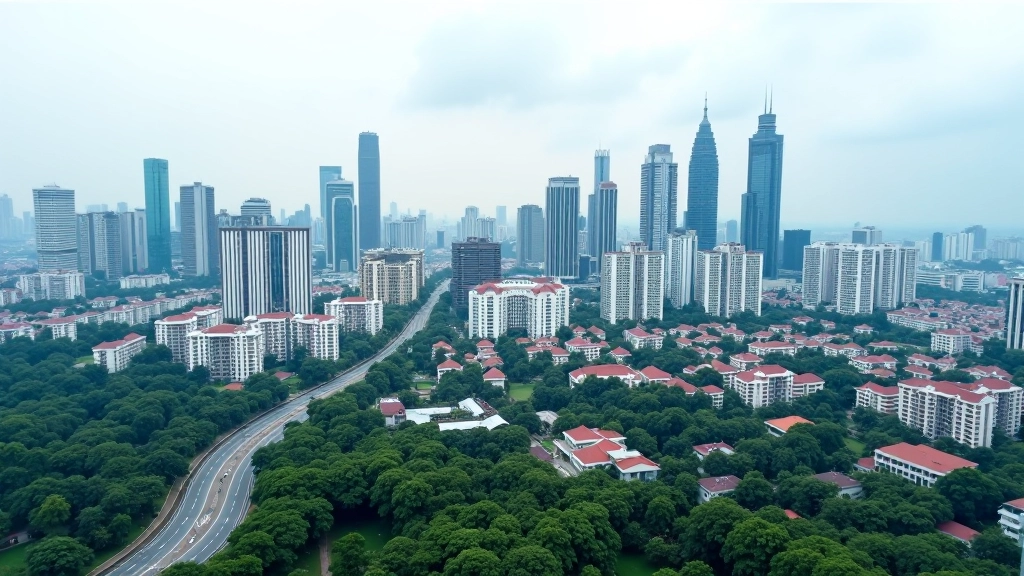

Residential Property Price Indices in Malaysia
Understanding how property markets move across different regions and what the numbers really tell us about affordability

What Are Property Price Indices?
Property price indices track how residential property values move over time. They’re not just single numbers—they’re carefully calculated measures that show real trends across different regions, property types, and price ranges. When you hear that property prices have risen by 5% year-over-year, that’s coming from an index.
Here’s the thing: they’re incredibly useful for understanding the market. Investors watch them closely. Policymakers use them to shape housing policy. Buyers and renters need them to understand whether they’re getting a fair deal. Without indices, we’d just have individual sale prices with no way to spot patterns.
Malaysia’s residential property indices have shown significant volatility since 2020. The pandemic hit, then recovery came unevenly across different regions. Some areas saw prices climb steadily while others stagnated. Understanding these variations matters because it affects affordability, investment decisions, and housing policy.


How Indices Are Calculated
Creating a property price index isn’t straightforward. It’s not just averaging all property prices in an area—that would be misleading. If 90% of sales that month were expensive condos and only 10% were affordable units, the average would skew high.
Malaysia’s indices use several approaches. The most common is the hedonic method—it accounts for property characteristics. A 1,200 sq ft condo in Kuala Lumpur gets different weighting than a 1,200 sq ft terraced house in Ipoh. Adjustments happen for location, age, size, and condition. This way, you’re comparing apples to apples.
The repeat sales method is another approach. It tracks the same property across multiple transactions. If a specific apartment sold for RM 450,000 in 2020 and RM 520,000 in 2024, that’s a real 15.6% increase for that property. Multiply this across thousands of properties and you’ve got reliable data.
Frequency matters too. Monthly indices show short-term volatility. Quarterly and annual indices smooth out seasonal fluctuations. That’s why you’ll see different indices released at different intervals—they answer different questions.
Key Trends Since 2020
The Malaysian residential market has experienced distinct phases of growth, stagnation, and recovery
2020-2021: Pandemic Pause
Early PhaseThe initial lockdown caused uncertainty. Transaction volumes dropped sharply. Sellers hesitated, buyers stayed on the sidelines. Prices didn’t collapse though—supply constraints kept them relatively stable. By late 2021, activity resumed as vaccination rates climbed.
2022-2023: Uneven Recovery
Growth PhaseUrban centers bounced back faster than suburban areas. Kuala Lumpur and Petaling Jaya saw 8-12% annual price increases. Secondary cities like Selangor’s Klang Valley experienced 5-7% growth. Regional markets in Johor and Penang grew more slowly at 2-4% annually. Rising interest rates in 2023 started cooling the market.
2024-2026: Stabilization
Current PhaseThe market’s settling into a new normal. Price growth has moderated to 3-5% annually across major markets. Affordable housing segments (under RM 300,000) are seeing stronger demand than luxury segments. Interest rate stability is helping buyer confidence return gradually.
Regional Variations Matter More Than You Think
National averages hide crucial differences. Selangor’s property index tells a completely different story than Kelantan’s. This matters because it affects where affordable housing actually exists.
The Central Region (Selangor, Kuala Lumpur, Labuan) has seen the steepest price increases. A median property here costs RM 420,000-650,000. That’s pushing out first-time buyers who earn RM 4,000-6,000 monthly.
The Northern Region (Penang, Perak, Kedah) shows moderate growth. Prices hover around RM 280,000-400,000 median. It’s more accessible but job opportunities are more limited than the central region.
The Southern Region (Johor, Negeri Sembilan) has strong fundamentals but slower price appreciation. Growing tech industries are attracting migration. Property indices show 2-3% annual growth, leaving room for affordability.
The East Coast (Terengganu, Kelantan, Pahang) remains the most affordable but faces economic headwinds. Property indices barely move year-to-year. That affordability comes with limited job markets.
This geographic disparity is the real story. You can’t talk about affordability without mentioning where you’re buying. A RM 300,000 property in Ipoh is affordable for many families. The same RM 300,000 in central Kuala Lumpur barely gets you a small condo.

Reading the Numbers Correctly
An index showing 105 compared to a base of 100 means prices are 5% higher than the baseline. But that baseline matters. If the baseline is 2015, then comparing to 2024 tells a different story than comparing to 2020.
Year-over-year changes are useful for spotting momentum. If prices grew 4% in 2024 but only 2% in 2023, that suggests acceleration. But don’t overinterpret monthly changes—they’re volatile. A single month of 2% decline doesn’t mean the market’s crashing.
Price-to-income ratios provide context that indices alone can’t. If median property prices are RM 400,000 and median household income is RM 60,000 annually, that’s a 6.7x ratio. Most experts consider anything above 5x as unaffordable. This is where policy interventions matter.
Affordable housing segments deserve separate attention. The government tracks indices for properties under RM 300,000 specifically because they serve different market needs. These often move differently than luxury segments. That’s crucial information for policymakers.
The Bigger Picture
Property price indices aren’t abstract statistics—they’re signals of real housing challenges. When an index shows 8% annual growth in Selangor but median incomes grow only 2%, that gap tells the affordability story. It explains why first-time buyers struggle. It justifies policy interventions like the Home Ownership Campaign or affordable housing quotas.
Understanding these indices helps you make better decisions whether you’re buying, investing, or advocating for housing policy. You’ll recognize regional patterns others miss. You’ll know when a price increase reflects genuine scarcity versus speculation. You’ll understand why affordability means something different in different parts of Malaysia.
The data from 2020 to 2026 shows us something important: the market’s stabilizing, but affordability challenges persist. Regional variations are widening. Affordable housing remains scarce in high-demand areas. These aren’t just numbers on a chart—they’re the foundation of housing policy decisions affecting millions of Malaysians.
Want to explore how affordability policy addresses these market trends?
Read About Housing PolicyInformation Disclaimer
This article provides educational information about residential property price indices and market trends in Malaysia. The data, analysis, and statistics presented are for informational purposes only and represent general market observations. Property prices vary significantly based on location, property type, condition, and market timing. Individual circumstances differ greatly. We recommend consulting with qualified real estate professionals, financial advisors, or property valuers before making investment decisions. Market indices reflect historical data and don’t guarantee future performance. Regional trends mentioned are based on publicly available market reports and may vary depending on data sources and calculation methods.
Related Articles